Commercial Concrete Grinding in Perth: Methods, Machines & When to Hire
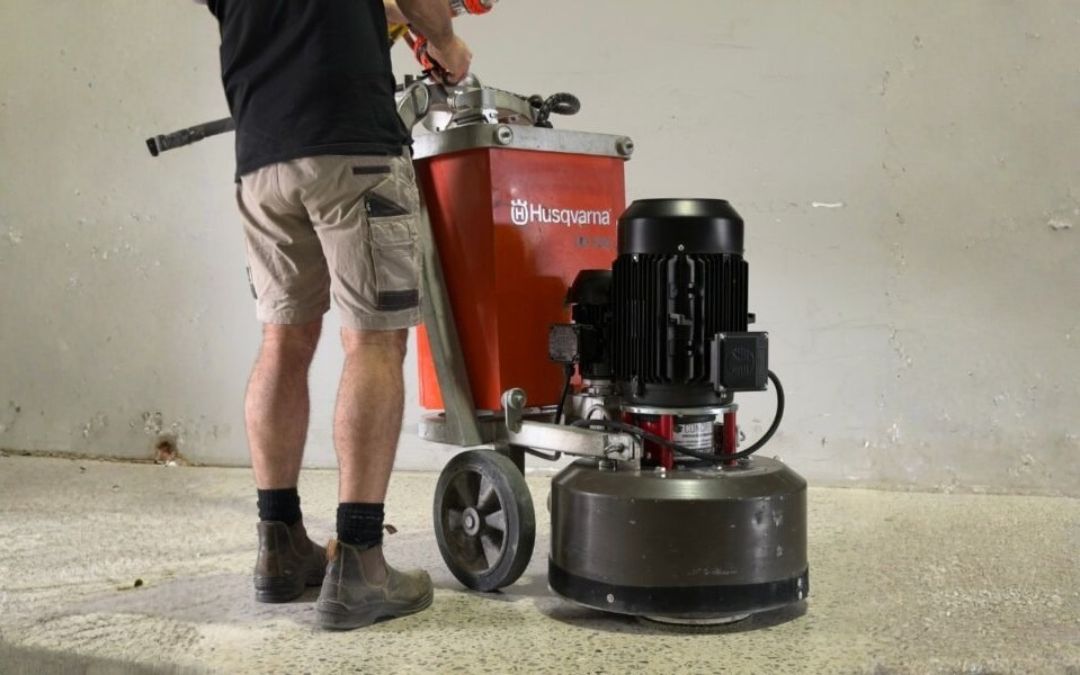

Commercial concrete grinding uses heavy-duty floor grinders fitted with diamond tooling to level slabs, remove coatings and glue, take down trip hazards and prepare concrete for new coatings. A typical commercial setup in Perth is a 415v planetary or double head grinder for the open floor, a handheld grinder for the edges and a HEPA vacuum to control dust.
This guide is for contractors, coating applicators, flooring trades and civil crews. It covers the jobs grinding is used for, how to match the machine to the floor, and the power, access and dust controls to plan before hire day, so you get the right tool for the job the first time.
What is commercial concrete grinding?
Concrete grinding is the process of wearing down the top of a slab with diamond tooling (grinding segments and pads made with diamond abrasive) fitted to one or more spinning heads. It removes coatings, glue, contaminants and high spots, and leaves a clean, flat surface with a light texture.
Commercial concrete grinding is the same process on a bigger scale: warehouses, retail tenancies, offices, car parks, factories and public areas. These jobs call for larger machines, often running on 415v three-phase power, along with proper dust extraction and a plan that keeps the job on time and on budget.
Grinding is one of three main concrete surface preparation methods, alongside scarifying and shot blasting. It produces the lightest profile of the three. On the concrete surface profile (CSP) scale set out by the International Concrete Repair Institute (ICRI), which runs from CSP 1 (almost flat) to CSP 10 (very rough), grinding typically sits at CSP 1 to 2.
What jobs is commercial concrete grinding used for?
Most commercial grinding falls into one of the jobs below. The table shows what grinding does in each case and where to start with machine choice.
| Job on site | What grinding does | Where to start |
|---|---|---|
| Preparing a slab for a thin coating or sealer | Removes contaminants and opens up the surface, leaving the light, even profile thin coatings need | 415v planetary or double head grinder |
| Removing thin coatings, paint and glue | Grinds the old finish off so the slab is clean and ready for the next system | Double head grinder for open areas, handheld grinders for edges |
| Levelling high spots and lips between slabs | Takes down small lips at joints and high spots across the floor | Double head or planetary grinder |
| Removing trip hazards on footpaths and public areas | Flattens raised edges and uneven sections without gouging the surface | Grinder Mower Petrol |
| Grinding and polishing a floor | Works through progressively finer tooling to refine the surface | Planetary grinder |
| Edges, walls, columns and tight corners | Reaches the areas a floor machine cannot | Handheld edge and corner grinders |
How do you grind concrete for coating preparation?
New coatings need a clean, sound surface to bond to. Grinding removes dirt, old sealers and other contaminants and opens up the top of the slab. Because it leaves a light profile, grinding suits sealers and thin-film coatings, which are coatings applied in thin layers.
Thicker, high-build coatings, which go on in heavier layers, usually need a rougher profile than grinding gives. In that case, shot blasting is often the better choice. The coating system decides the profile, so always check the CSP listed on the manufacturer’s product data sheet before you choose a machine.
Can grinding level high spots and lips between slabs?
Small lips between slab panels and high spots across a floor are a common reason to grind. A double head or planetary grinder takes them down evenly across a large area. For deep lips or when a floor level needs lowering, a scarifier removes material faster, and a grinder can then refine the finish.
How do you remove trip hazards on footpaths and public spaces?
Raised edges on footpaths, walkways and public spaces are a trip risk. The Grinder Mower Petrol (a Galaxy 250 diamond grinder) is designed for trip hazard removal on council footpaths and public spaces. Its coupling lets the diamond tooling follow typical undulations in the surface and still flatten it without gouging. It runs on petrol with electric start, so it works away from mains power.
Which concrete grinder should you hire for a commercial job?
Match the grinder to the size of the area, the power on site, the access into the building and the finish you need. The table below lists our commercial grinder range with specifications taken from each product page.
| Machine | Power | Cutting width | Weight | Best suited to |
|---|---|---|---|---|
| Grinder Large Double Head 415v | 415v, 8 kW | 760 mm | 340 kg | Hard-working commercial floor preparation, with dual counter-rotating heads |
| Grinder Planetary 415v 500 Series | 415v, 7 kW | 505 mm | 295 kg | Grinding and polishing large commercial floors |
| Grinder Planetary 415v 600 Series | 415v, 7.5 kW | 600 mm | 335 kg | Large commercial floors with 415v power |
| Grinder Planetary 415v 800 Series | 415v, 12.5 kW | 820 mm | 455 kg | Large commercial floors. The largest push grinder in the Husqvarna PG range. |
| Grinder Planetary 415v Remote Control PG690 | 415v, 12.5 kW | 640 mm | 598 kg | Industrial and commercial grinding where the machine has to fit through a standard door |
| Grinder Planetary 415v Remote Control PG830 | 415v, 16.5 kW | 800 mm | 652 kg | Big industrial and commercial floors. The largest and most powerful remote-control grinder in the Husqvarna PG range. |
| Grinder Planetary Large LPG | LPG, 13 kW | 625 mm | 220 kg | Outdoor and large-scale grinding away from mains power |
| Grinder Mower Petrol | Petrol | 250 mm | 124 kg | Trip hazard removal, footpaths and fast coating removal |
| Grinder Planetary 240v 500 Series | 240v, 2.2 kW | 515 mm | 284 kg | Smaller areas on standard 240v power |
| Grinder Medium 240v | 240v, 2.2 kW | 480 mm | 150 kg | Triple disc grinding and polishing on standard 240v power |
| Handheld grinders (small, medium and large) | 240v | 100 to 180 mm | 3 to 5 kg | Edges, walls, columns and corners |
Planetary or double head grinder: what is the difference?
A planetary grinder carries several small grinding heads, usually three, on a main plate that turns in the opposite direction to them. This spreads the cut evenly, so planetary grinders give a smooth, consistent finish across large areas and can also polish.
A double head grinder, such as the Satellite 760 Dual in our Grinder Large Double Head 415v, has two main heads that rotate in opposite directions. It is built as a hard-working concrete preparation machine for coating removal, levelling and getting a slab ready for its next finish.
Push grinder or remote-control grinder?
With a push grinder, the operator walks behind the machine and guides it. With a remote-control grinder, the operator steers the machine from a handheld controller, leaving them free to manage hoses and cables while it keeps grinding. Husqvarna rates this at up to 40% higher productivity on its PG830 and PG690 remote-control grinders. Both machines also have a motorised drive, which makes moving them around site easier.
Should you grind concrete wet or dry?
Dry grinding means grinding without water while a vacuum or dust collector captures the dust at the machine. Most of our grinders are set up to connect to one of our vacuums or dust collectors for dust-controlled dry grinding, and our larger planetary grinders attach to the Vacuum Large 240v or Dust Collector Medium 415v.
Wet grinding uses water to keep dust down. WorkSafe WA lists wet work methods, such as wet cutting or polishing, as one way to reduce silica dust. Wet work leaves a slurry of water and concrete fines on the floor that has to be collected, and our Vacuum Wet 90 Litre is built for wet and dry clean-up on site. Talk to us about which approach suits the site and the coating that follows.
Featured product: Grinder Large Double Head 415v

The Satellite 760 Dual is an industry workhorse for commercial concrete preparation. Its dual counter-rotating heads cover a 760 mm cutting width on 415v three-phase power, and it is a solid, hire-friendly machine for large floors.
View Product | Get a Quote
When is grinding not the right method?
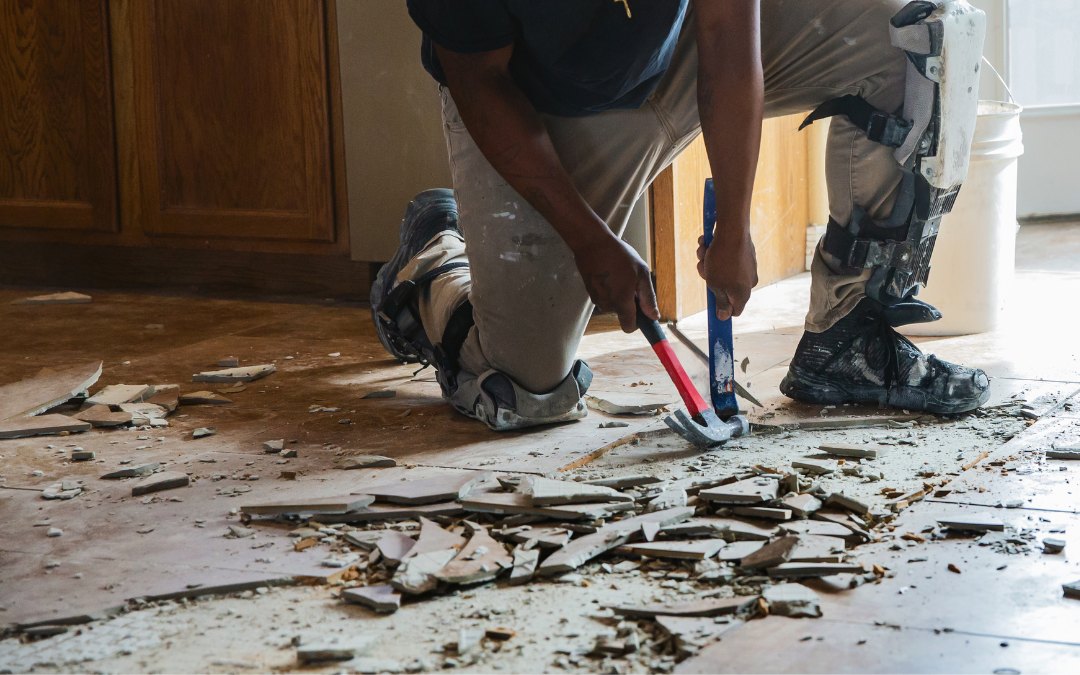
Grinding suits light removal and a smooth, lightly textured finish. Thick coatings, screeds and built-up material come off faster with a scarifier, and coatings that need a rougher profile suit shot blasters. For tiles, vinyl or thick adhesive, lift the covering with a floor stripper first, then grind off any leftover glue. See our guide to grinding vs scarifying vs shot blasting for a side-by-side comparison.
What should you plan before hiring a commercial grinder?
Power supply: Most large commercial grinders run on 415v, which is three-phase power. Confirm there is a three-phase outlet within reach of the work area before the machine arrives. If there is not, our 25kVA and 50kVA diesel generators supply 415v three-phase power, or a 240v, LPG or petrol grinder may suit the job.
Access and weight: Our 415v floor grinders weigh between 295 kg and 652 kg, and the Grinder Large Double Head 415v alone is 340 kg. Measure doorways, lifts and corridors, and check the floor can take the load on suspended slabs (upper floors that are not sitting on the ground) before delivery.
Dust extraction: Pair every grinder with a vacuum or dust collector that suits it. Large grinders connect to our Vacuum Large 240v or Dust Collector Medium 415v, and handheld grinders connect to a small vacuum.
Diamond tooling: Match the tooling to the slab and the job. Metal diamond tools grind and remove coatings, resin pads polish, and cup wheels on handheld grinders handle the edges. Tell us about the slab and the coating, and we will recommend the tooling.
Edges and corners: Floor machines cannot reach right up to walls and columns, so plan a handheld grinder for the perimeter.
A test area: Before committing the whole floor, grind a small patch and apply the coating to it to check the bond and finish.
You can read more about diamond tool types in Husqvarna’s diamond tools range overview.
What about mining, civil and remote sites?
Mine sites, civil works and other remote jobs often have no mains power to plug into. The Grinder Planetary Large LPG and Grinder Mower Petrol run without it, and our 415v diesel generators can supply three-phase grinders on site. Delivery to site can be arranged, with same-day or next-day options depending on location and availability. If the job runs longer, contact us before the hire period ends to extend it, and for long-term hires we can organise servicing or swap-outs to keep your site running. See our mining and civil equipment hire range for more.
How do you reduce silica dust when grinding concrete?
Grinding concrete releases respirable crystalline silica (RCS), fine dust that can cause irreversible lung damage. Safe Work Australia sets the workplace exposure standard at 0.05 mg/m³ over an eight-hour day. In WA, high-risk silica work also needs a silica risk control plan before work starts, and WorkSafe WA’s guide includes a template.
On a grinding job, capture dust at the grinder with on-tool extraction, vacuum the floor instead of sweeping it, and use a respirator selected to AS/NZS 1715 where extraction alone is not enough. Our dust extractor range includes HEPA-filtered vacuums and dust collectors that connect to our large grinders. For the full list of controls, see silica dust controls for surface preparation.
What does a commercial grinding job in Perth look like?
Here is how a typical commercial grinding job might come together. A flooring contractor is preparing an empty retail tenancy slab in a Perth shopping centre for a thin-film coating. The old floor covering has been lifted, leaving glue residue and a few small lips at the slab joints. The tenancy is reached through a standard door, and the work has to happen after trading hours.
A practical plan:
Step 1: check the coating’s data sheet. A thin-film system calls for a light profile, which grinding gives.
Step 2: confirm there is a 415v outlet and measure the doorway. The PG690 remote-control grinder is 670 mm wide, so it fits through a standard door.
Step 3: grind the open floor with metal diamond tooling to remove the glue and take down the lips at the joints.
Step 4: finish the edges and around columns with a handheld grinder connected to a small vacuum.
Step 5: run a HEPA vacuum on every machine, and vacuum the floor clean instead of sweeping it.
Step 6: coat a small test area before the full floor goes down.
Talking the plan through with our team before hire day helps you book the right machine, tooling and extraction together.
Frequently asked questions
What is the difference between concrete grinding and polishing?
Grinding uses metal diamond tooling to remove coatings, glue and high spots and to open up the slab. Polishing comes after grinding and uses progressively finer resin pads to smooth the surface and add a sheen. Planetary grinders can do both jobs by changing the tooling.
Can a concrete grinder remove epoxy and other coatings?
Yes, for thin coatings. Floor grinders remove thin coatings, paint, sealers and glue. For thick epoxies and built-up coatings, a 415v scarifier usually removes the bulk faster, and a grinder then refines the surface to the profile the new coating needs.
Do commercial concrete grinders need three-phase power?
Most large commercial grinders run on 415v three-phase power. If your site only has standard 240v outlets, the Grinder Planetary 240v 500 Series and Grinder Medium 240v suit smaller areas. For outdoor sites without mains power, the Grinder Planetary Large LPG and Grinder Mower Petrol are options, or a 415v diesel generator can power a three-phase grinder on site.
Will a commercial floor grinder fit through a standard door?
Some will. The Grinder Planetary 415v Remote Control PG690 is 670 mm wide, so it can pass through a standard door. Larger machines such as the Grinder Large Double Head 415v are 840 mm wide, so measure your narrowest doorway, lift or corridor and check it against the dimensions on each product page.
What vacuum should I use with a commercial concrete grinder?
Match the vacuum to the grinder. Our Vacuum Large 240v and Dust Collector Medium 415v both connect to large grinders and use HEPA (high-efficiency particulate air) filters. Handheld grinders connect to a small vacuum. Tell us which grinder you are hiring and we will recommend the right extraction.
Where can I hire a commercial concrete grinder in Perth?
For concrete grinding in Perth, Concrete Hire supplies commercial grinders from our Canning Vale base at 15/24 Baile Rd, with delivery to site available depending on location and availability. Call 1300 048 521 or add a grinder to your quote list on our website to get started.
Hire commercial concrete grinders in Perth
Concrete Hire is a Perth family business that supplies grinders for commercial concrete grinding by contractors, trades and civil crews across Perth and WA. Every machine is maintained to professional standards, and our Canning Vale service centre repairs, rebuilds and upgrades concrete grinding and polishing equipment with qualified mechanics. As authorised Worx+ resellers, we also supply grinding and polishing parts and consumables.
Browse our concrete grinder hire range or call 1300 048 521 and we will help you choose the right grinder, tooling and extraction for the job.